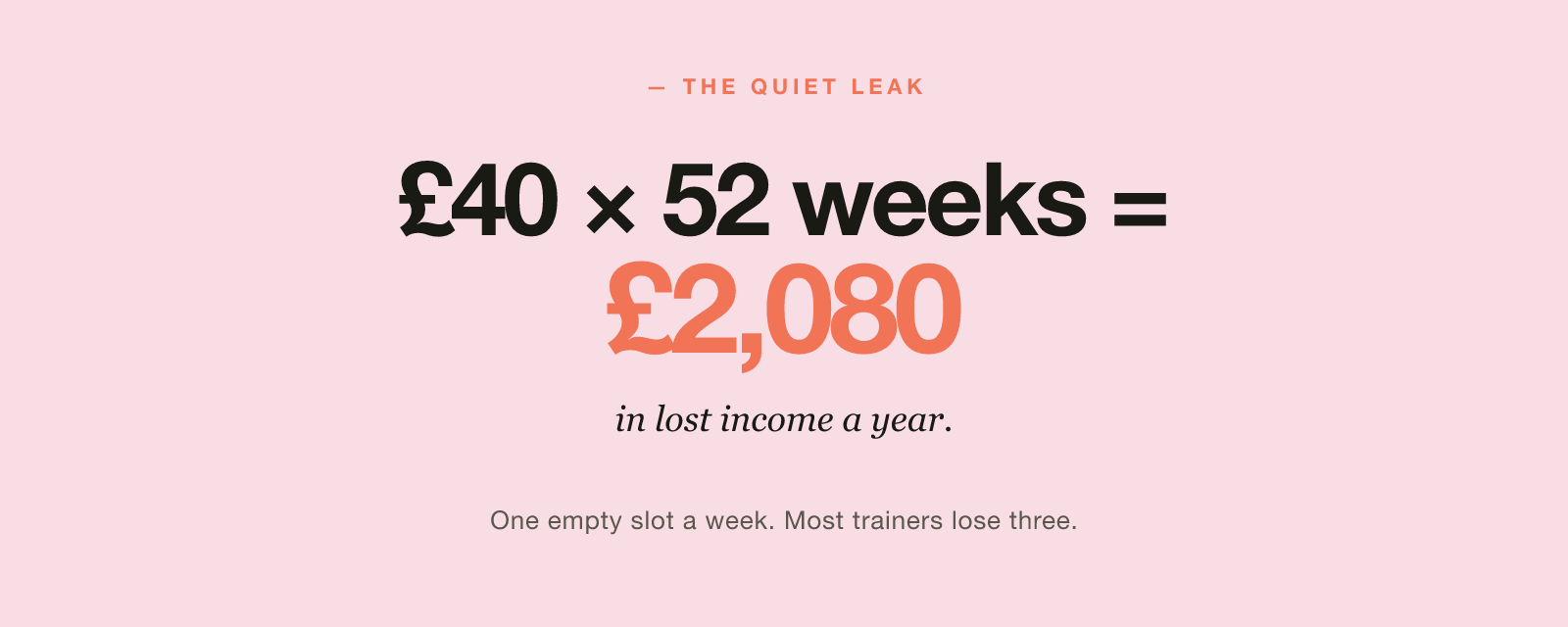
A client texts you at 7am. Their 9am session is off. That hour is now gone. You can't fill it at two hours' notice, and you can't get the money back. A personal trainer cancellation policy is what stops this repeating. Do this a few times a week and you lose hundreds of pounds a month. Not because you didn't work, but because someone changed their mind over breakfast.
Most personal trainers know they should have a cancellation policy. Far fewer actually have one written down and used the same way every time. This guide fixes that. It's simple, it's fair, and it keeps your income steady.
Why being too nice costs you money
Start from the legal position, because it is more supportive than most trainers assume. Government guidance says a cancellation charge must be a genuine estimate of what you lost. So charging for a slot you could not refill is exactly what the rule contemplates. Citizens Advice sets out the client side, and the Consumer Contracts Regulations 2013 are the underlying law.
Trainers are kind people. You got into this to help. So saying "you'll still be charged" can feel mean. The policy stays fuzzy and the exceptions pile up. So a paid session slowly turns into an optional one.
Here's a better way to see it. A clear policy isn't unkind. It's the boundary that keeps you in business so you can keep helping people. Your time is the only thing you sell. When a client drops out late, they take a slot a paying client could have used. Then they hand it back worth nothing. A policy simply puts a fair price on that.
The four parts of a personal trainer cancellation policy
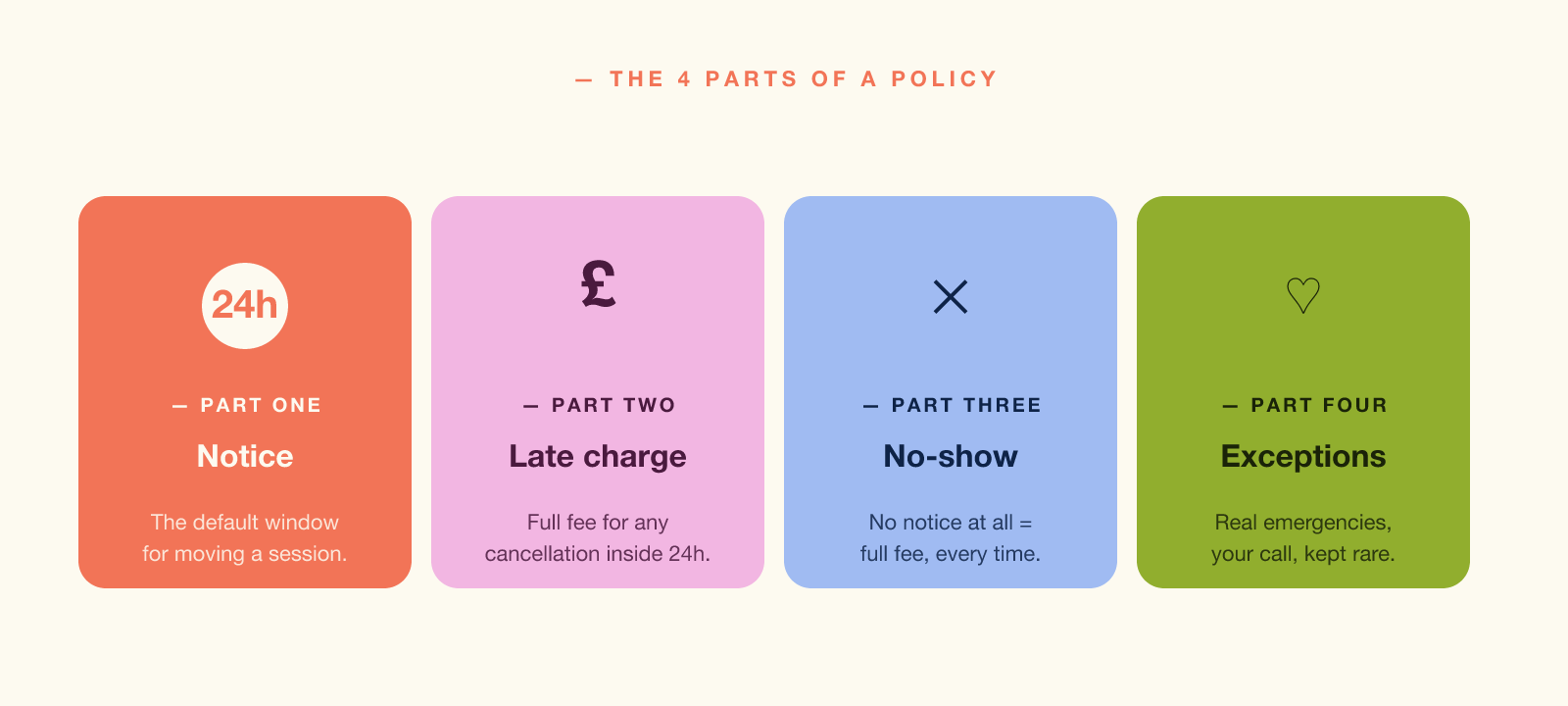
A good policy answers four questions in plain words.
- How much notice do you need? Twenty-four hours is the standard, and it's easy to defend. It gives you time to offer the slot to someone else.
- What happens with less notice? The session is charged in full. Keep this firm. "Charged sometimes" or "half charged" just invites a debate every time.
- What about a no-show? No notice at all means the full fee, every time. There's nothing to argue about — they didn't turn up.
- When do you make an exception? Real emergencies and illness are where your kindness belongs. But keep it rare, and keep the choice yours, so "exception" doesn't quietly become the rule.
Writing your personal trainer cancellation policy down
Keep it short and human. Too much legal language and nobody reads it. Too casual and nobody respects it. Something like this works:
My cancellation policy: I ask for at least 24 hours' notice to cancel or move a session. With 24 hours or more, there's no charge and we'll find another time. With less notice, or a missed session, the full fee applies. After all, you cannot fill the slot at short notice. I'll always use common sense for genuine emergencies.
That last line does a lot of work. It shows you're fair, while keeping the final say with you.
How to tell clients so it actually sticks
A policy only protects you if clients have really agreed to it. The mistake is mentioning it once, quietly, in week three. Instead:
- Bring it up at the start, before the first session. New clients expect a few ground rules from a professional. This is the easiest moment to set them.
- Put it in writing. Add it to your welcome message or client agreement and ask them to confirm they've read it. Now it's not your memory against theirs.
- Say it warmly, with the reason. Try: "Quick thing on logistics — I keep a 24-hour cancellation policy. A late drop means I can't fill the slot. Most clients never bump into it, but I like to be upfront."
The reason makes it feel fair, not harsh. If your enquiry follow-up flow has a welcome step, drop the policy into that message. Then every new client sees it before session one.
How to enforce it without being the bad guy
Keep the charge proportionate and you stay on firm ground. UK guidance expects any sum you keep to reflect your real loss rather than act as a penalty. That expectation comes from Part 2 of the Consumer Rights Act 2015. A court can strike out a term it judges unfair. Meanwhile CIMSPA, the chartered body for the sector, is the standard most UK trainers work to.
This is where most policies fall apart. You wrote it and you explained it. But the first time someone cancels at 8am, you waive the charge because saying no feels awful. Do that once and the policy is dead. Everyone learns it bends.
The trick is to make the charge automatic. Instead, let your scheduling software for small businesses apply the late fee through booking and invoicing. Then there's no awkward moment to dread. The client agreed to it. The system applied it. You didn't have to be the one to bring it up.
Being consistent is also kinder than it sounds. Clients respect a trainer with clear, steady rules far more than a pushover. The real damage comes from charging some people and not others, because that feels random and unfair.
The exact message for an awkward moment
When someone cancels late and you need to apply the charge, keep it short and friendly:
No problem at all, thanks for letting me know! Just a heads-up that as it's within 24 hours, this one will be charged as per the policy. Shall I get you booked in for later this week?
It does three things: it's kind, it applies the policy without apology, and it points straight at the next booking. Done.
What about genuine emergencies?
You're not a robot, and neither are your clients. Sometimes a real emergency happens — a sick child, a family crisis, a burst pipe at home. The point of keeping the final say is simple. You can choose to be generous when it truly matters.
So here is the rule. Charge as standard, then waive the fee occasionally as a gift you choose to give. That way kindness stays special, instead of turning into something clients quietly expect. If you waive the charge every time someone has a busy week, the policy slowly disappears.
A good line to hold in your head: "I'll always be human about real emergencies. But a change of plans isn't one." Keep that line warm but firm, and you'll protect both your income and your relationships.
Bringing it together
One last practical note. You are working for yourself, so an empty slot is lost income rather than a cost you can claim. HMRC lets you deduct allowable expenses, but never the hour nobody paid for.
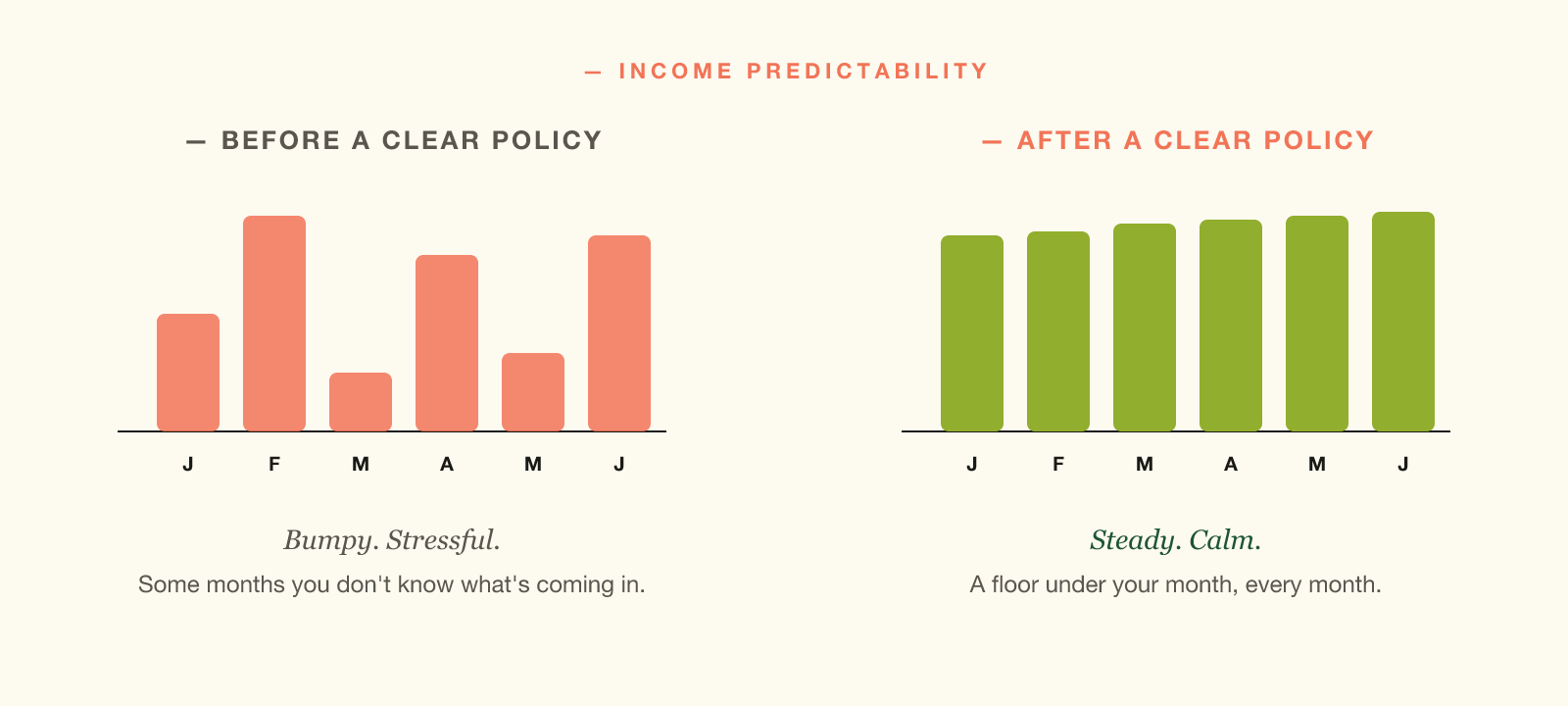
A cancellation policy isn't about being tough. It's about making your income predictable so you can keep doing work you love. Write the four parts down. Share them at the start. Then let your tools apply them the same way every time. As a result you never have the hard conversation yourself.
The trainers who do this aren't meaner than the ones who don't. They're just calmer — and they get paid for the time they set aside.
Found this useful? 5 Warning Signs a PT Client Is About to Cancel covers what to watch for when a regular drifts. Meanwhile What Is Your Real Hourly Rate? shows you what each lost slot is really worth.
Set the policy once, let it run itself.
Aasure flags late cancellations in real time and applies your fee through booking and invoicing. Every new client confirms the policy at sign-up, so the boundary holds itself.
Join the Waitlist →