Booking commission fees are the easiest cost in your business to miss. It is the last day of the month. Your app says you took £2,400 in bookings. A solid number, so you close it feeling good. Then, twelve hours later, the platform invoice lands. £480, gone.
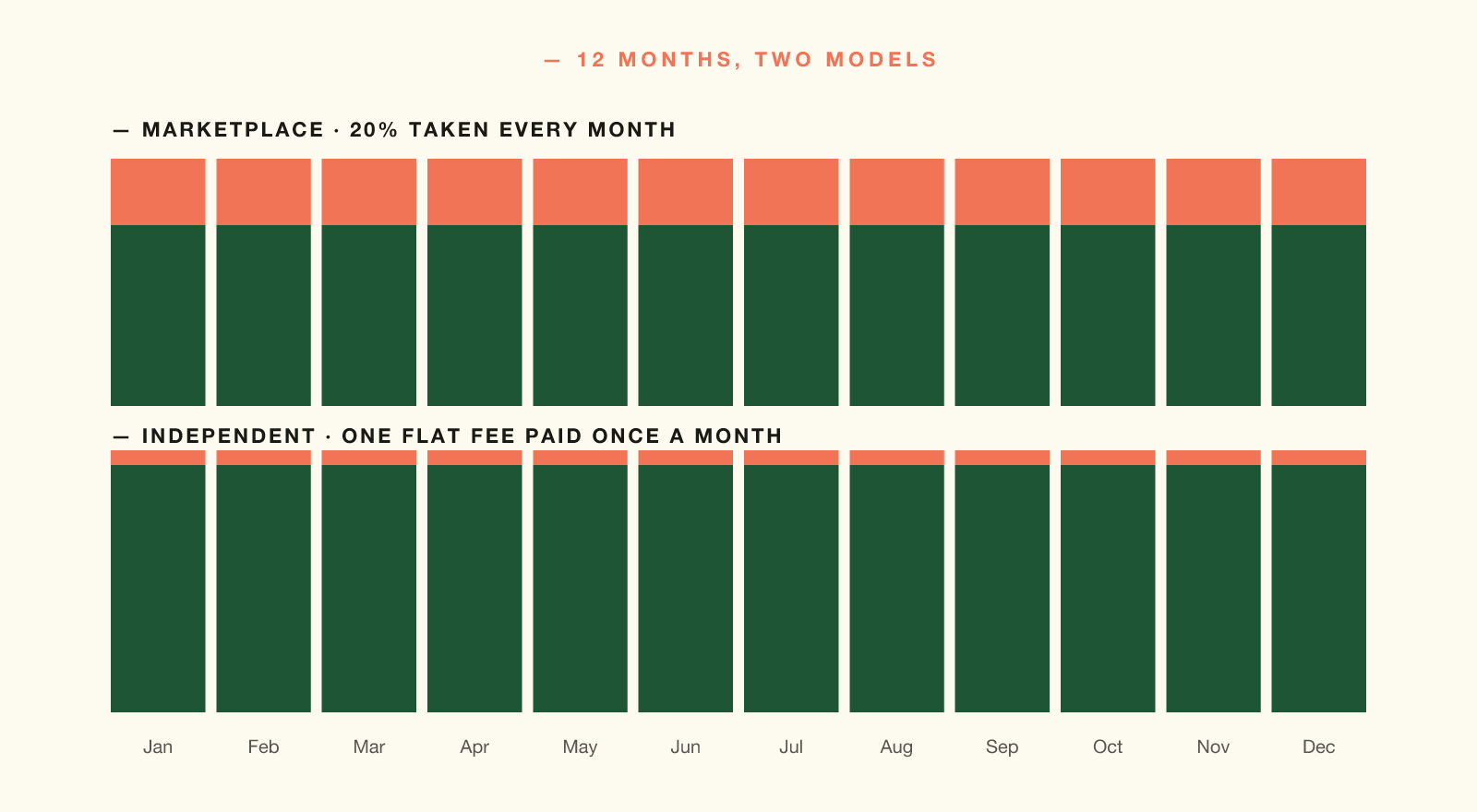
Twenty per cent of every booking. Quietly, and then every month after that.
The big names all run a version of the same model. Fresha, Booksy and Treatwell list you alongside other salons, drive discovery, then take a percentage. Rates vary, but the structure rarely does. Fresha publishes its own commission rates, so you can check yours.
Booking commission fees never feel expensive at first, because there is no upfront charge. You barely notice the deduction either. It simply arrives as a smaller payout. But run the numbers and this becomes one of the costliest ways to trade.
The booking commission fees maths nobody runs
So let us do it together.
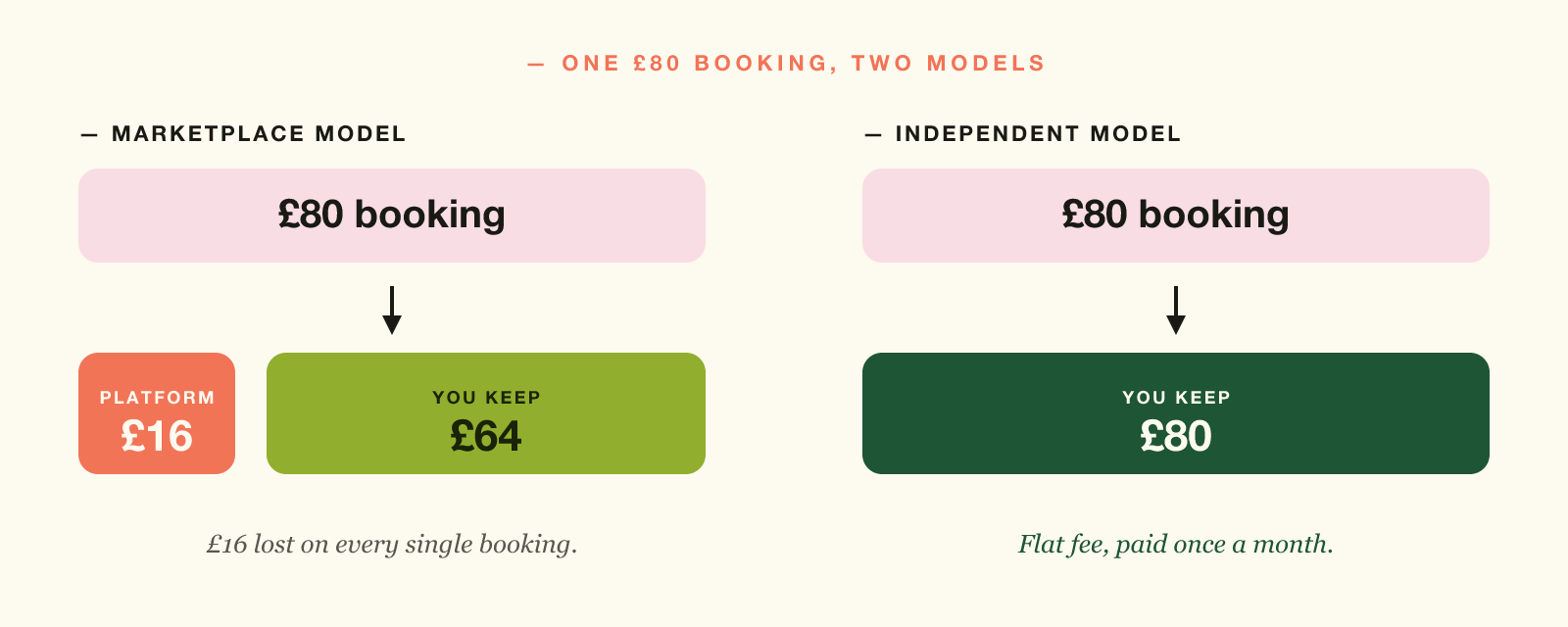
Say you charge £80 for a treatment. The platform takes 20%, so £16 per session. A regular visits eight times a year. Then they stay three years.
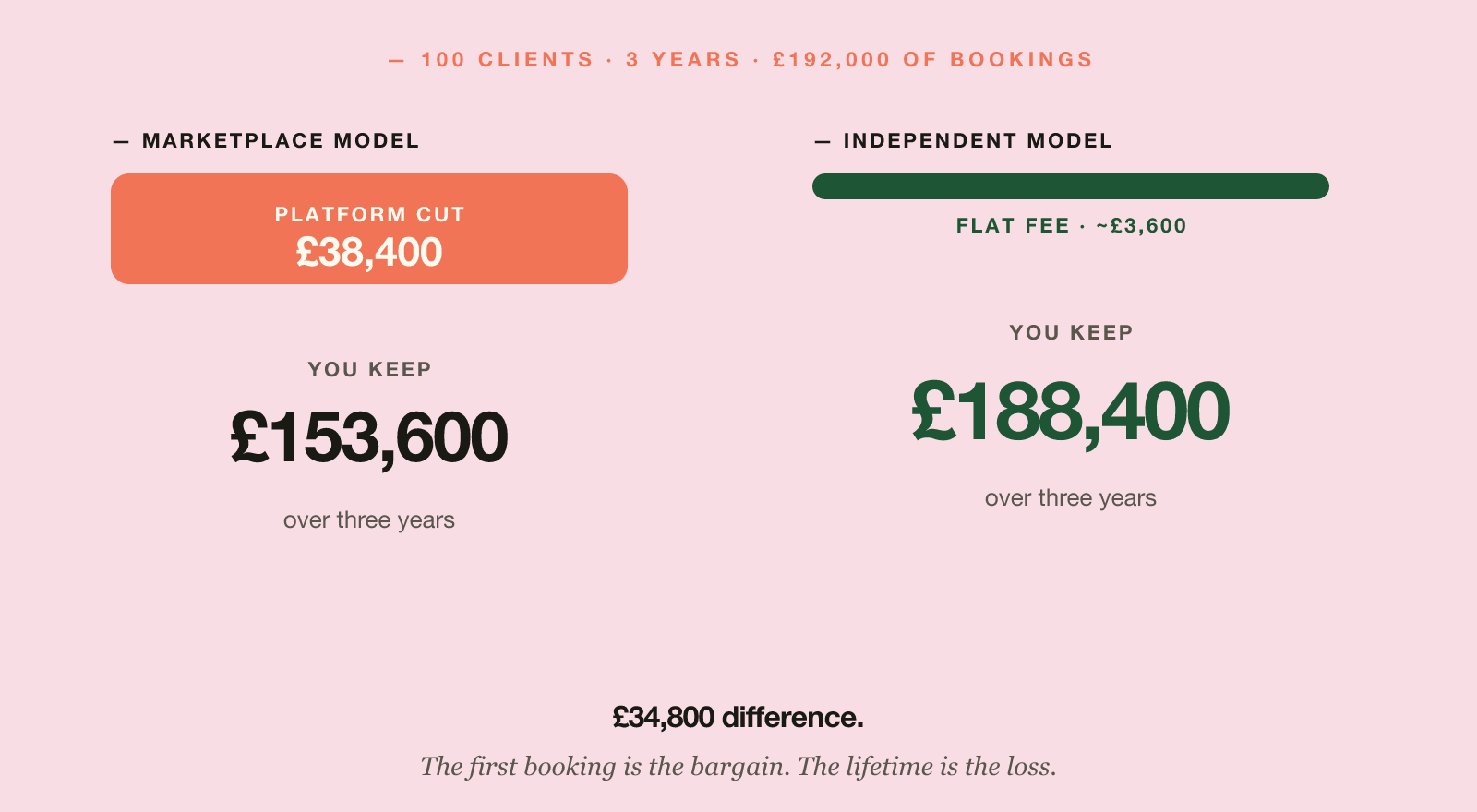
In short, that client is worth £80 × 8 × 3, or £1,920 in revenue.
Of that, the marketplace quietly keeps £384.
With a hundred such clients, the marketplace keeps £38,400 over three years. That is not pocket change. Instead it is a deposit on a flat, a year of childcare, or the studio refit you keep postponing.
And this is the conservative version. Some platforms charge more on first-time bookings, sometimes above 30%. Others add separate transaction fees. Some allow discounts only through their own tools, so even your promotions pay them. Remember that commission counts as an allowable expense, which softens it slightly at tax time.
Whose client is it, really?
The commission is the visible cost. However, the bigger one is structural.
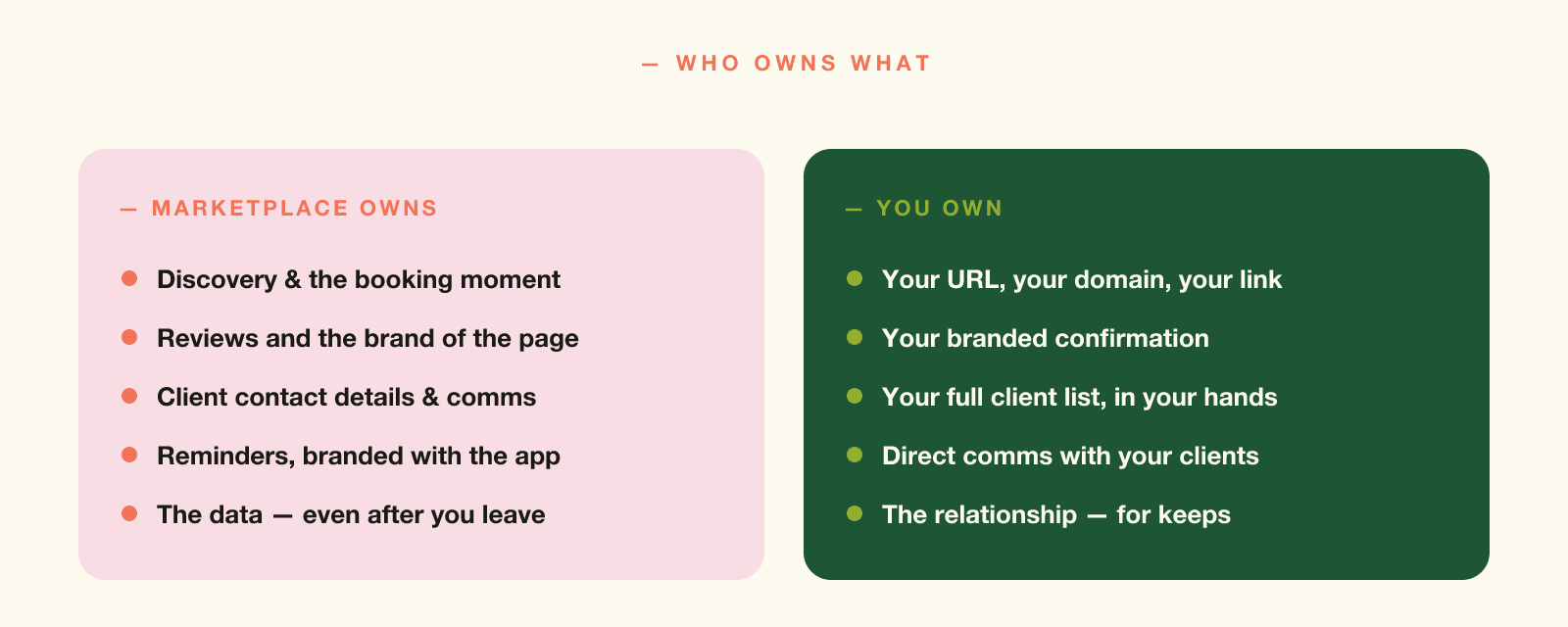
When a client books on a marketplace, the platform owns the relationship.
- The booking arrives in the platform's app rather than your inbox.
- The reminder carries the marketplace logo rather than yours.
- Reviews live on the marketplace instead of your own page.
- You cannot email or text the client outside the platform without breaking the terms.
- If you leave, the marketplace keeps the data. Yet under UK GDPR you remain a controller of your own client records, so know which party holds what.
The client does not think they booked you. Instead they think they booked an app. Meanwhile that app already has the next salon ready to suggest.
The brand cost behind booking commission fees
This one resists measurement, yet over five years it outweighs the commission.
On a marketplace you appear beside your competitors. Your prices sit against theirs at the exact moment of booking. Every confirmation looks identical to every other salon nearby. So your tone, your aesthetic and your approach never come through.
You spent years building a brand people walk past three salons to reach. Then you handed the most important moment to a platform. That platform treats you as one listing among many.
"The first booking is the bargain. The lifetime is the loss."
What independent booking actually looks like
The alternative is not difficult. It is simply less normalised.
- Your URL. A link for your Instagram bio, so it lands on a page with your name.
- Your branded confirmation. So the client sees your logo, your tone and your colours.
- Your client list. Names, numbers and history sitting in your account, not the platform's. Should you ever need to prove ownership, HMRC expects those business records kept for five years.
- A flat fee. Around £29–£89 a month for most independent platforms, however many bookings arrive. Note the £90,000 VAT threshold once turnover climbs.
- Zero commission on returning clients. That is the biggest single change. Once someone has booked you, they are yours.
For most established salons, moving from 20% commission to a £69 flat fee pays for itself in month one. After that the difference stays in your pocket. The National Hair & Beauty Federation offers members further business guidance.
How to switch without losing clients
Most owners stay because they fear the bookings will dry up. However, they will not, provided you work in order.
- First, set up your independent booking page with name, services, prices and photos.
- Next, update your Instagram bio link, Google Business profile and any QR codes.
- Send one warm message to existing clients. Something like: "I've moved to a new booking page. Same time, same prices, smoother experience."
- Offer a small thank-you for the first booking on the new page. A free add-on, or a course discount. Anything cheaper than the commission you paid.
- Keep the marketplace listing live for 8–12 weeks, for new discovery only. But never link to it from your own channels.
- Finally, once 80% of regulars have moved, close the marketplace listing.
Within three months most independent salons see no drop in bookings. Instead they see margin rise. Since Making Tax Digital began in April 2026, that margin is easier to evidence too.
You spent years getting good at your craft. The platform taking a cut of every appointment does not pay you for that. You do. If a fee ever looks disproportionate, Part 2 of the Consumer Rights Act 2015 governs unfair contract terms.
It's time to stop letting it be.
Common questions
Is Aasure an alternative to marketplace booking apps like Fresha or Booksy?
Yes. Aasure suits independent salons and beauty pros who want their own booking page and client list. A flat monthly fee replaces commission on every appointment.
Will I lose my regular clients if I move off a marketplace?
Most regulars follow you to your own booking page within a couple of months. That is especially true after one warm message and a small thank-you for their first booking. New-client discovery slows briefly while you rebuild it on your own channels.
How much do independent booking platforms usually cost?
Most charge a flat monthly fee — typically £29–£89 depending on features — regardless of how many bookings come through. For an established salon taking more than about £1,500 a month, the flat fee almost always beats a percentage.
What does Fresha actually cost you?
Run your numbers in the free Real Bill Calculator. It breaks the annual bill across subscription, commission and card processing, using Fresha's published 2026 UK pricing.
Open the calculator → Or: Client Lifetime Value Calculator →