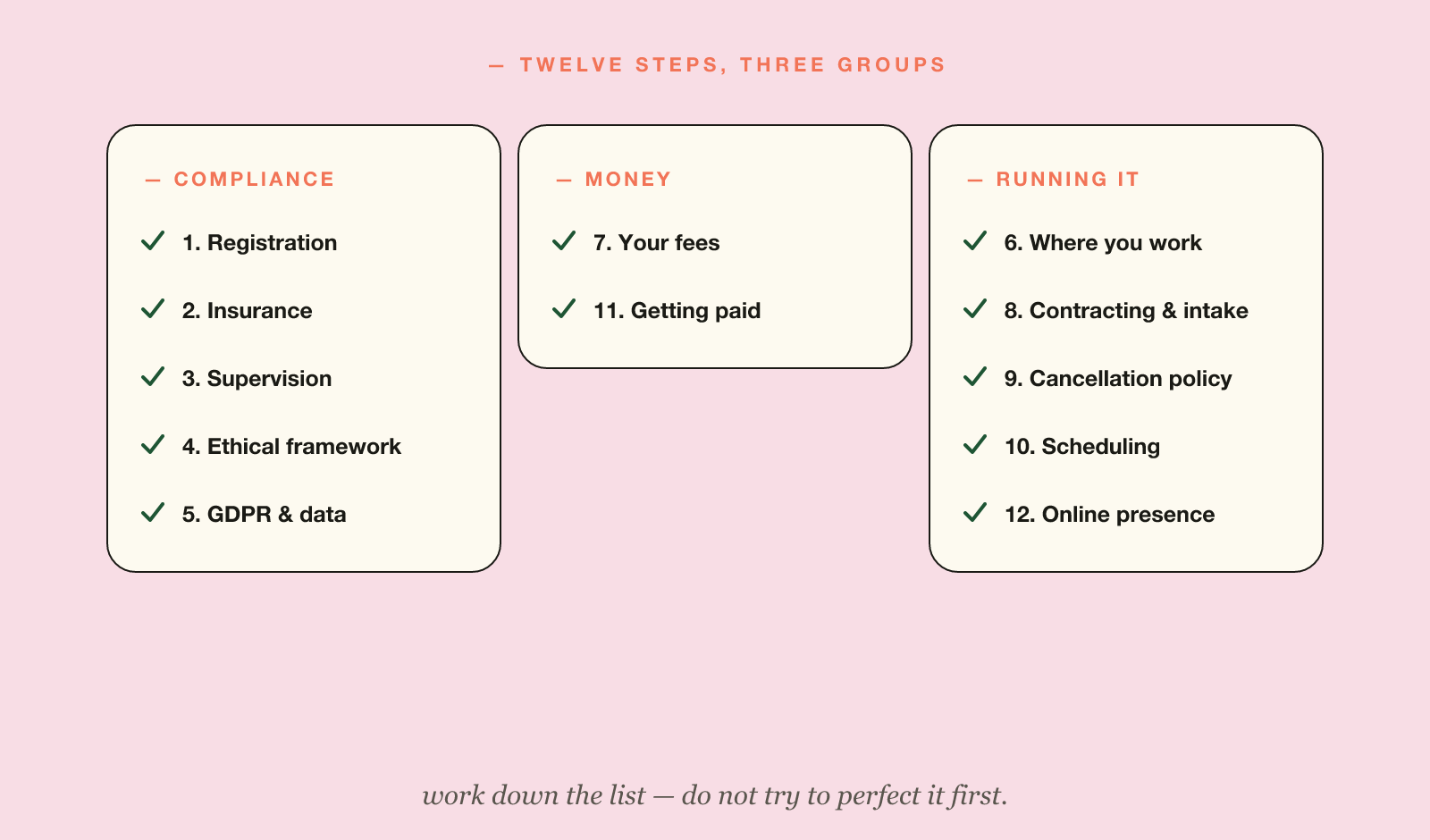
Going into private practice is one of the most rewarding moves a therapist can make. It is also one of the most daunting. Your clinical training prepared you to hold a room. It said almost nothing about insurance, invoicing, GDPR, or how to fill your diary. Suddenly you're not just a therapist; you're a business. Setting up a private therapy practice is mostly admin you were never taught.
This checklist breaks the whole thing into manageable parts. Work through it roughly in order. Then you'll have a practice that's professional, compliant and ready for clients, without the overwhelm.
A note: requirements vary by professional body and circumstance. So treat this as a starting map. Then confirm the specifics with your membership body, and with a qualified adviser where it matters.
1. Registration and membership for a private therapy practice
Which register you join depends on your training. The BACP register is the most common route for counsellors. Psychotherapists often go to the UKCP instead. Meanwhile practitioner psychologists must register with the HCPC, because that title is protected by law.
First, confirm your registration with the relevant body. That means BACP, UKCP, NCPS or your modality's equivalent. Then check you meet their rules. Many bodies have specific guidance for independent practitioners. This is the foundation everything else sits on, so start here.
2. Professional liability insurance
You need professional indemnity and public liability insurance before you see a single private client. It's usually a requirement of your professional body and, more importantly, it protects you if a claim is ever made. Several insurers specialise in cover for counsellors and psychotherapists — get quotes and have cover in place from day one.
3. Clinical supervision
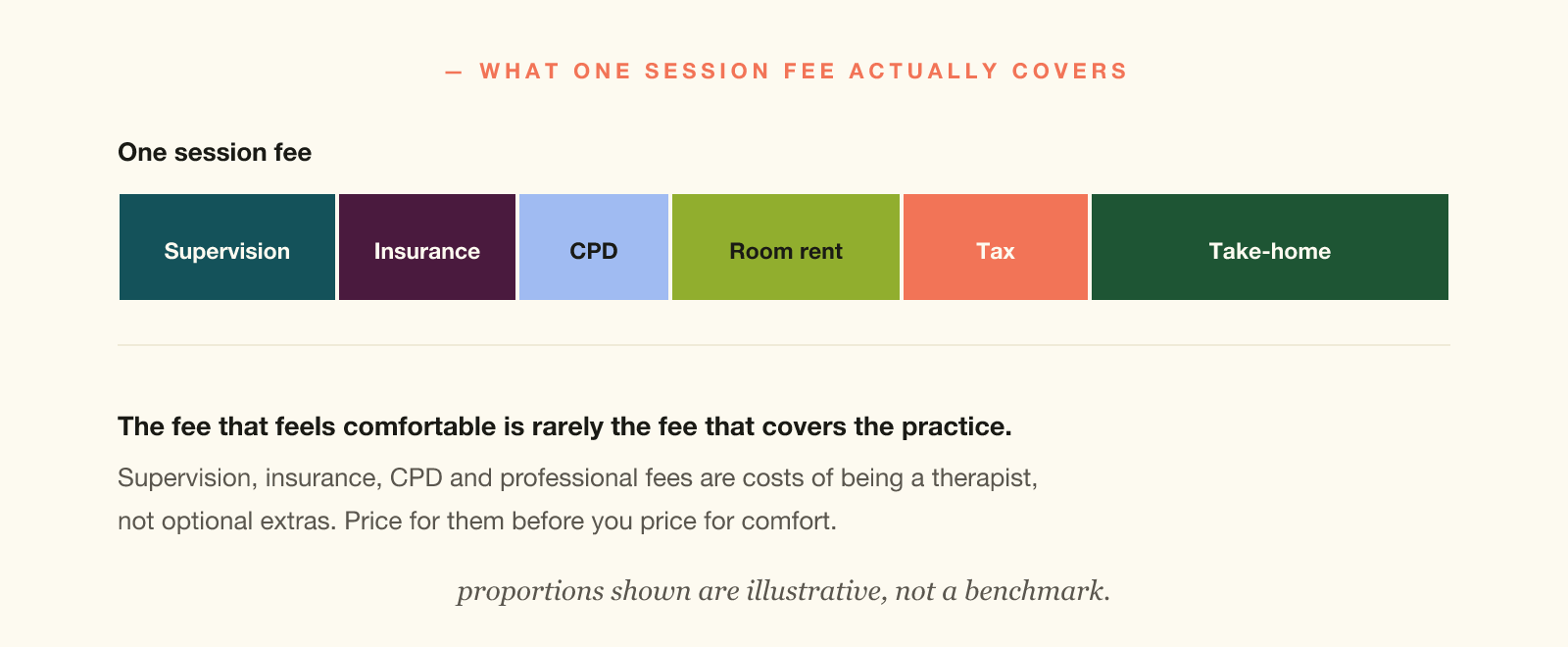
Private practice doesn't change your need for supervision — if anything, working alone makes it more important. Arrange regular supervision that meets your body's requirements, and build the cost into your fees from the start. It's a non-negotiable professional cost, not an optional extra.
4. A clear clinical and ethical framework
You do not need to write one from scratch. The BACP Ethical Framework is the reference most UK practitioners work to.
Write down how you'll work. That covers contracting, confidentiality and its limits, your approach to risk, record-keeping, and how you handle endings. Having these clear before you start protects both you and your clients, and makes the early sessions far less wobbly.
5. GDPR and data handling in a private therapy practice
Two things surprise people here. First, most therapists must pay the ICO data protection fee, because you process personal data. Second, the ICO publishes guidance written for small organisations, so you do not need a lawyer to follow it.
You'll hold sensitive personal data — notes, contact details, assessments. Under UK GDPR you must handle it lawfully. So store it securely and keep it only as long as you need it. Finally, give every client a clear privacy notice. Many sole practitioners have quiet gaps here, so get it right from the outset rather than retrofitting later. Our guide to GDPR for private practice therapists walks through what the law actually expects.
6. Where you'll work
Decide your setting: a rented therapy room, working from home, online, or a mix. Each affects cost, insurance, privacy, and the kind of client you attract. If you're renting, build the cost into your fees. If you're online, make sure your platform is private and secure and your home setup protects confidentiality.
7. Your fees
Set a fee that reflects your training and your real costs. Those include supervision, insurance, CPD, room rental and professional fees. In other words, not just what feels comfortable. Undercharging is the most common early mistake, and it's hard to fix later. Decide your standard fee, your policy on any concessionary spaces, and how you'll handle future increases.
8. A contracting and intake process
You need a smooth path from first contact to first session. That means an enquiry response and a way to share your contract. It also means intake forms and scheduling. Done well, this whole process should take minutes of admin per client — not a scattered hour of emails. Our guide to building an enquiry follow-up system covers the part between first contact and first session.
9. A cancellation policy
Late cancellations are a real cost. Decide your notice period and your charge, write it into your contract, and introduce it warmly during contracting. A clear policy, fairly applied, protects your income without harming the therapeutic relationship. But it has to be set out from the start, never sprung on a client later. If you're drafting one, here's how to write a no-show policy that clients accept. Meanwhile the free no-show cost calculator shows what late cancellations cost you a year.
10. Scheduling and reminders
You need a reliable way to manage your diary and remind clients of appointments. Missed sessions and double-bookings are stressful and costly. Scheduling software for small businesses means appointments confirm and remind themselves. So your week stays orderly without you holding it all in your head.
11. Getting paid
Register as a sole trader with HMRC before you invoice anyone. After that you file a Self Assessment return each year. But check whether Making Tax Digital for Income Tax applies to you yet, since it is being phased in.
Decide how clients pay, and when. In advance is cleanest for therapy. Then set up invoicing that doesn't intrude on the clinical relationship. Money handled smoothly and discreetly, ideally automatically, keeps the focus where it belongs: on the work. If you're a UK sole trader, check your Making Tax Digital start date while you're setting the rest up.
12. A simple, ethical online presence
You need somewhere clients can find you and understand how you work. So a calm website or directory profile is enough. Include your approach, your focus areas, and how to get in touch. It needn't be elaborate. It needs to be findable, trustworthy, and easy to book from.
Putting it together without drowning in admin
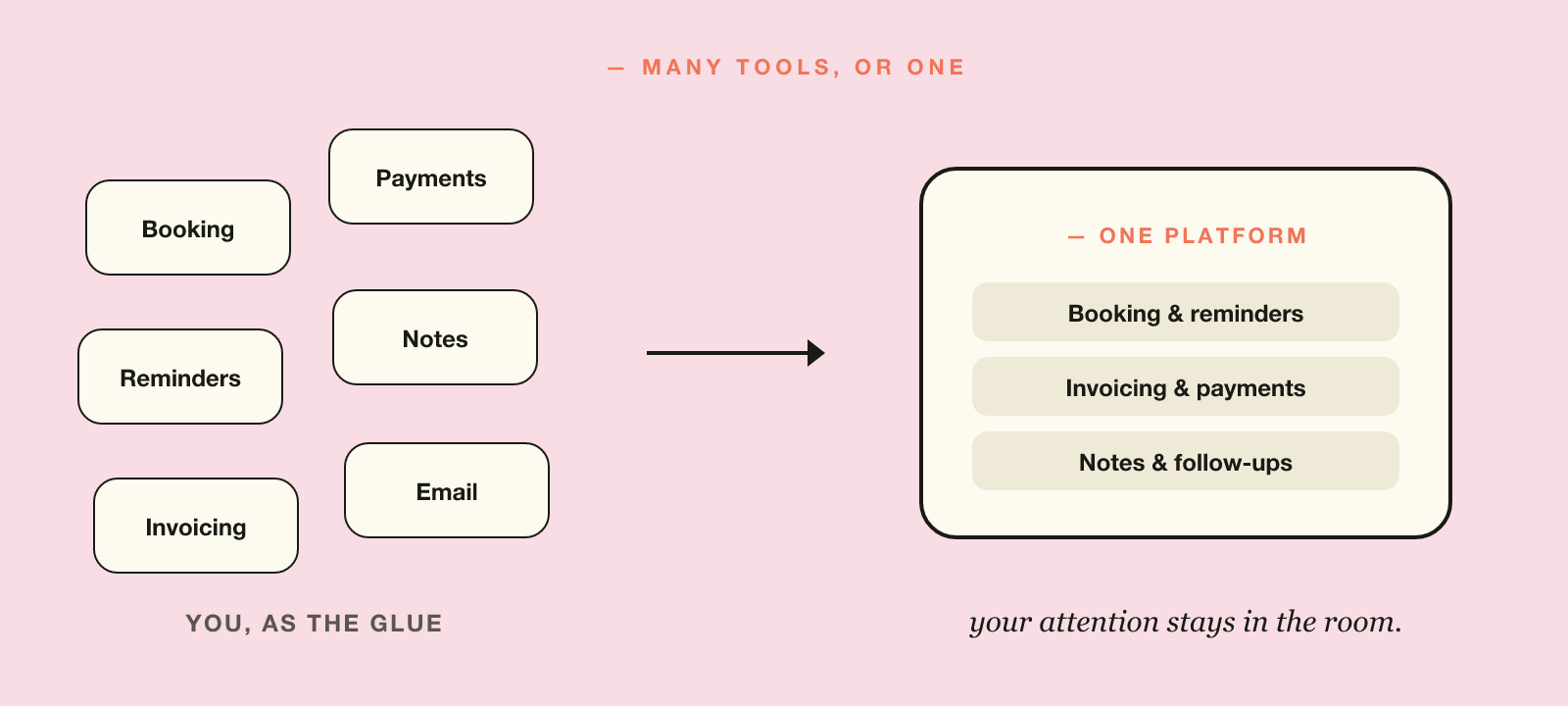
Read as a list, this can look like a second job. Indeed for many therapists the business side eats the energy they'd rather give clients. The trap is a dozen disconnected tools. One for booking, another for payments, a third for reminders. Notes live somewhere else again, and you are the glue.
The calmest practices run their routine admin in the background. Booking, reminders, invoicing and follow-ups happen quietly. As a result the practitioner's attention stays on the room. So that is the case for all in one business management software. Fewer tools, joined up, doing the boring jobs.
How Aasure helps
Aasure brings the operational side of a private therapy practice into one place. You get a branded booking page, automatic reminders and discreet invoicing. Follow-ups run themselves, and your data stays inside the UK and EU. It takes the recurring admin off your plate. So running your practice feels less like becoming a business, and more like doing the work you trained for.
Work down this list in order, and don't try to perfect everything before you start. Get registration, insurance, supervision, GDPR and fees in place. Add a way to book and get paid. Then open your doors and refine as you go.
Spend your energy in the room.
Aasure handles booking, reminders, invoicing and follow-ups. So the admin runs itself, and your attention stays with the client in front of you.
Join the Waitlist →