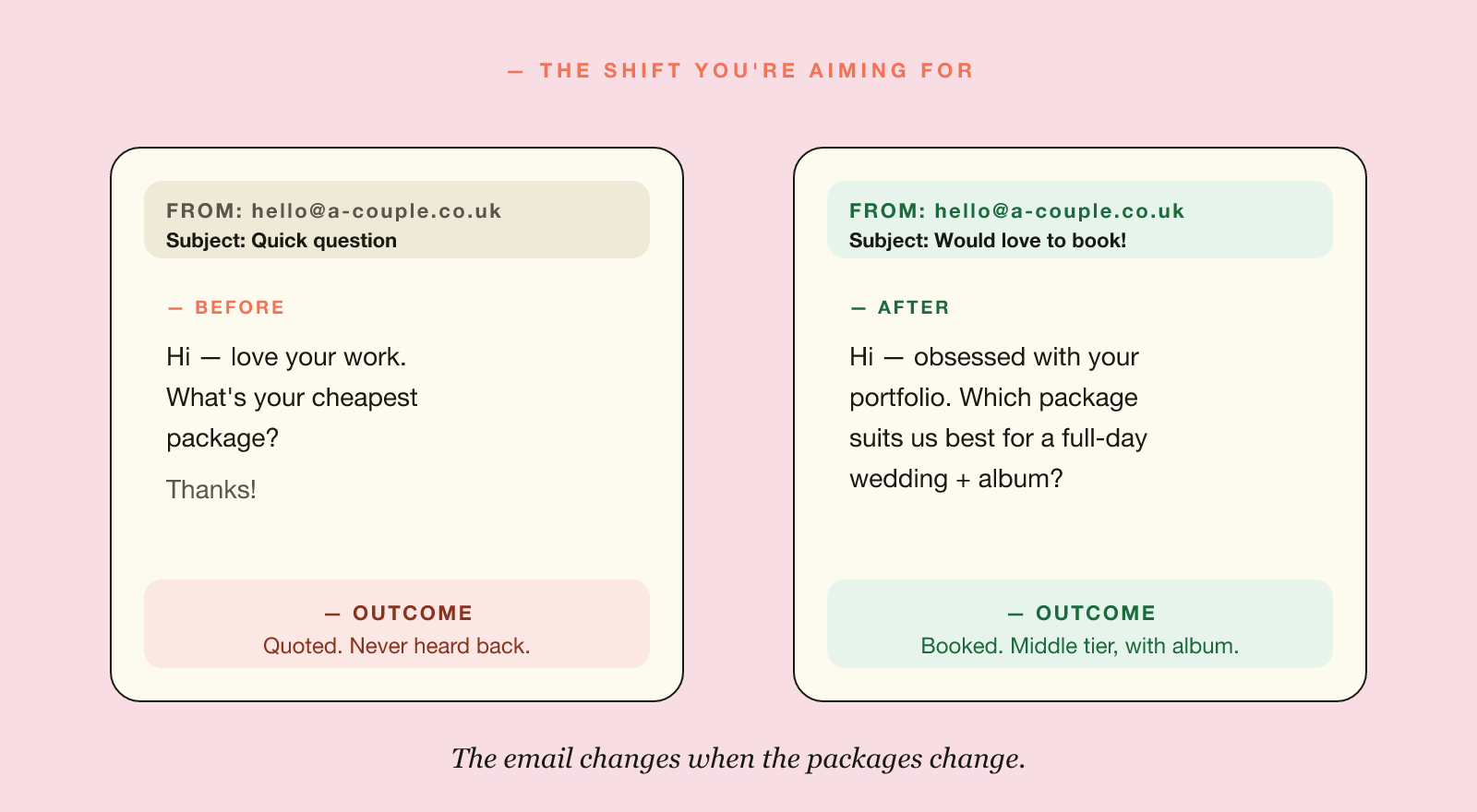
Badly built wedding photography packages invite one email. "Hi, we love your work — what's your cheapest package?" So you quote, then wait, then hear nothing. Meanwhile a couple books someone £200 cheaper. It is exhausting, and it teaches you the work is a race to the bottom.
It is not. When couples fixate on price, your packages usually gave them nothing else to weigh. So fix the structure and the question changes. It moves from "how much?" to "which one?"
Why couples default to price
When two options look alike, only the number remains to compare. So if your wedding photography packages read "6 / 8 / 10 hours", you handed over a spreadsheet. Naturally they pick the cheapest that fits. After all, you gave them no reason not to.
Good design makes the value visible. Then the choice becomes what memory they want, rather than which hour to cut. You are not hiding the price. Instead you surround it with enough meaning that it stops being the only thing in view. The British Institute of Professional Photography sets standards worth citing when you justify one.
The three-tier wedding photography packages structure
Three packages is the sweet spot. One feels like an ultimatum, while five causes paralysis. Three creates a comparison, and comparison is where you win.
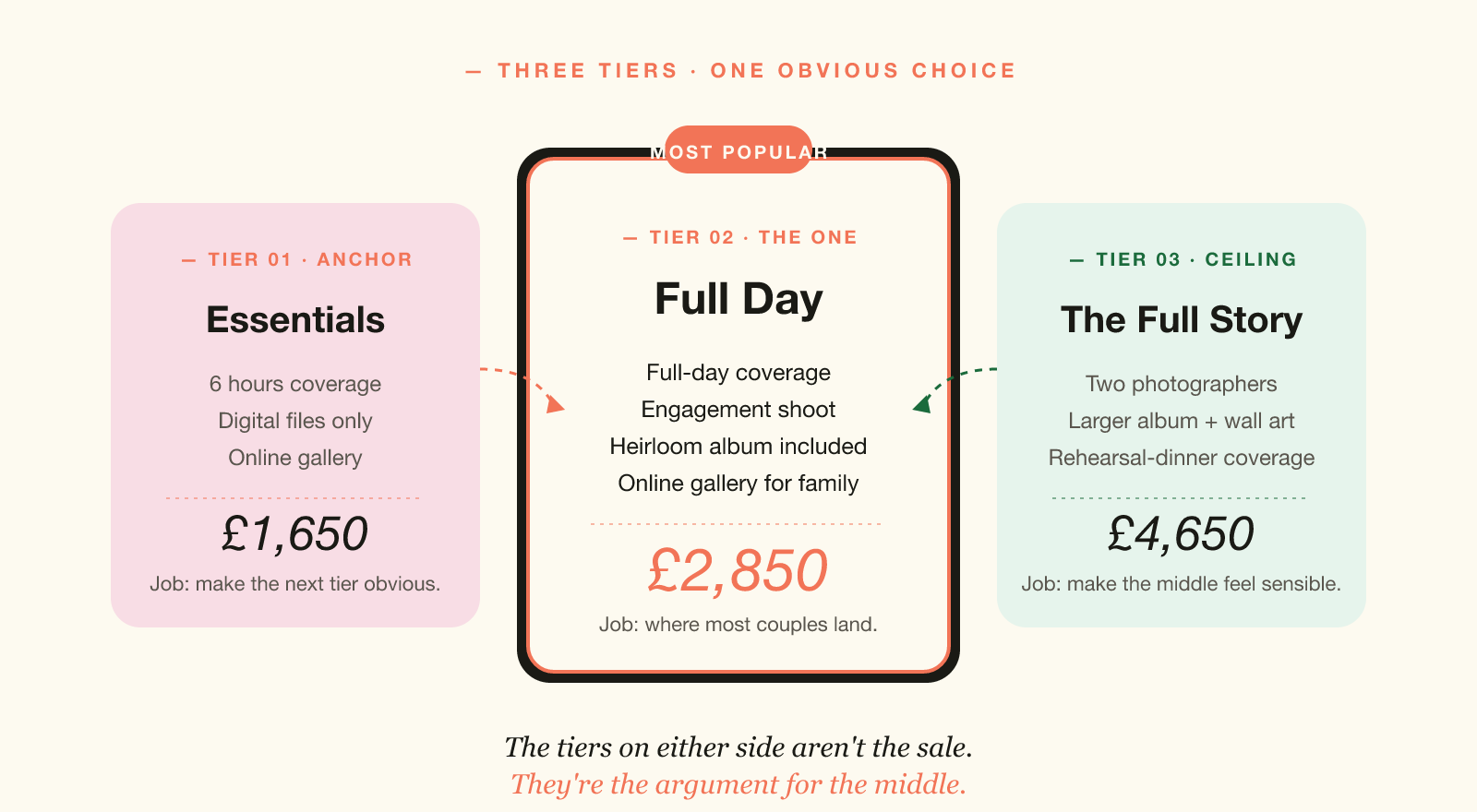
The psychology is simple. Most people avoid the cheapest and the dearest, then choose the middle. So build your tiers to make that middle obvious.
- The entry tier exists to anchor rather than sell. Deliberately limited: fewer hours, no album, digital files only. Its job is to prompt one thought. "Will that be enough?" So do not apologise for it. Simply make stepping up feel worth it.
- The middle tier is the one you want to sell. So make it clearly the best value. Full-day coverage, plus the things couples regret skipping. An engagement shoot, a proper album. The price should feel like a jump in value rather than cost. Most couples land here and feel clever.
- The premium tier does two jobs. First it serves couples who want everything. Second it makes the middle look reasonable. A second photographer, a bigger album, wall art. Even couples who never buy it help, since its existence makes the middle feel sensible.
Anchor with value, not hours
The biggest shift is simple. Stop describing packages in units of your time. Instead describe them in units of their experience. "Eight hours of coverage" reads as a cost. "From getting-ready nerves to the first dance" reads as a memory.
Build each tier around what the couple actually cares about:
- The moments covered (getting ready, ceremony, speeches, evening party).
- The keepsakes (an heirloom album, prints, wall art).
- The experience (an engagement shoot, a pre-wedding call, a beautiful online gallery to share with family).
Compared on those terms, a missing album stops being a line item. Instead it is the difference between having the first dance photographed or not. That is a decision about value. And value is where your price stops being the problem.
Make the album non-optional in your best tier
Couples usually regret skipping an album, yet hesitate to add one later. So do not make it an extra. Bake it in. An included album lifts the tier's perceived value and raises revenue per booking. It also removes a decision they would rather not make. In short, it grows your average booking without touching the headline rate.
Handling the "cheapest package" enquiry
When that email lands, resist quoting the bottom number. Reframe instead:
Thanks so much, and congratulations! I have three collections. Most couples choose [middle tier], which covers the full day and includes [album]. Shall we have a quick call to find the right fit? When suits you?
That does three things. First it moves the conversation to a call, where you sell on connection. Second it nudges toward the middle tier. Finally it signals a considered offer rather than a rate to haggle over.
The mistake that quietly loses bookings
One trap catches many photographers: too much choice. Faced with six packages and a list of add-ons, couples do not feel spoiled. They feel overwhelmed. Then they do the easiest thing. Usually that means delaying, comparing you with someone simpler, or picking the cheapest to stop thinking.
So keep three clear collections, each with an obvious purpose. Then let the call do the fine-tuning. Clarity sells, while confusion stalls.
Price your wedding photography packages with confidence
A quieter point. Couples sense hesitation in how you present prices. List them with nervous caveats and quick discounts, and you teach couples the price is soft. So state your packages plainly, then let the structure persuade. The right couples respond to confidence rather than the lowest number. Remember your quote forms a contract. Part 2 of the Consumer Rights Act 2015 expects fair terms. Deposits should also reflect real loss rather than act as a penalty.
So rebuild around the couple's experience rather than your hours. Make the middle tier the obvious choice. Then watch "what's your cheapest?" become "which one should we go for?" You will also register with HMRC and claim kit as an expense. Then you file Self Assessment. Cross £90,000 and VAT applies, while Making Tax Digital has applied since April 2026. Couple galleries also count as personal data under ICO guidance.
Found this useful? How to Build an Enquiry Follow-Up System covers what happens between the first email and the signed contract.
Charge what your work is worth.
Aasure is one platform for photographers. Branded booking, staged deposits and balances, automatic invoicing and gallery follow-ups. Charge with confidence, then deliver an experience that matches.
Join the Waitlist →